Paul Jolly Photography Chapter 6.1
Strobes
Studio flash systems, known as strobes, give you further control over your lighting but studio strobes would normally be
set at different power levels; To provide the maximum range, one of the strobes may have to be at maximum power; this with
the aperture needed for the shot and the ISO could overload the sensor in the camera. Another occasion to use the ND filters
on the front of the camera lens to get the correct exposure.
Note that the exposure time is not part of the strobe setting because the light timing is based on the flash output not often
on the the length of time the camera shutter is open.
Most simple studio flashes do not have a true 'power' setting just a method of changing the time that the maximum power is on
for, thus by setting the 'power' to one eighth, the flash fires at full power but only for one eighth of the time.
The use of multiple strobes (or flash guns) can provide a balance of light difficult to arrange in any other way.
To lower the light output of a strobe ND filters can be added to the front of the strobe, use these with care as the flash energy will heat them up.
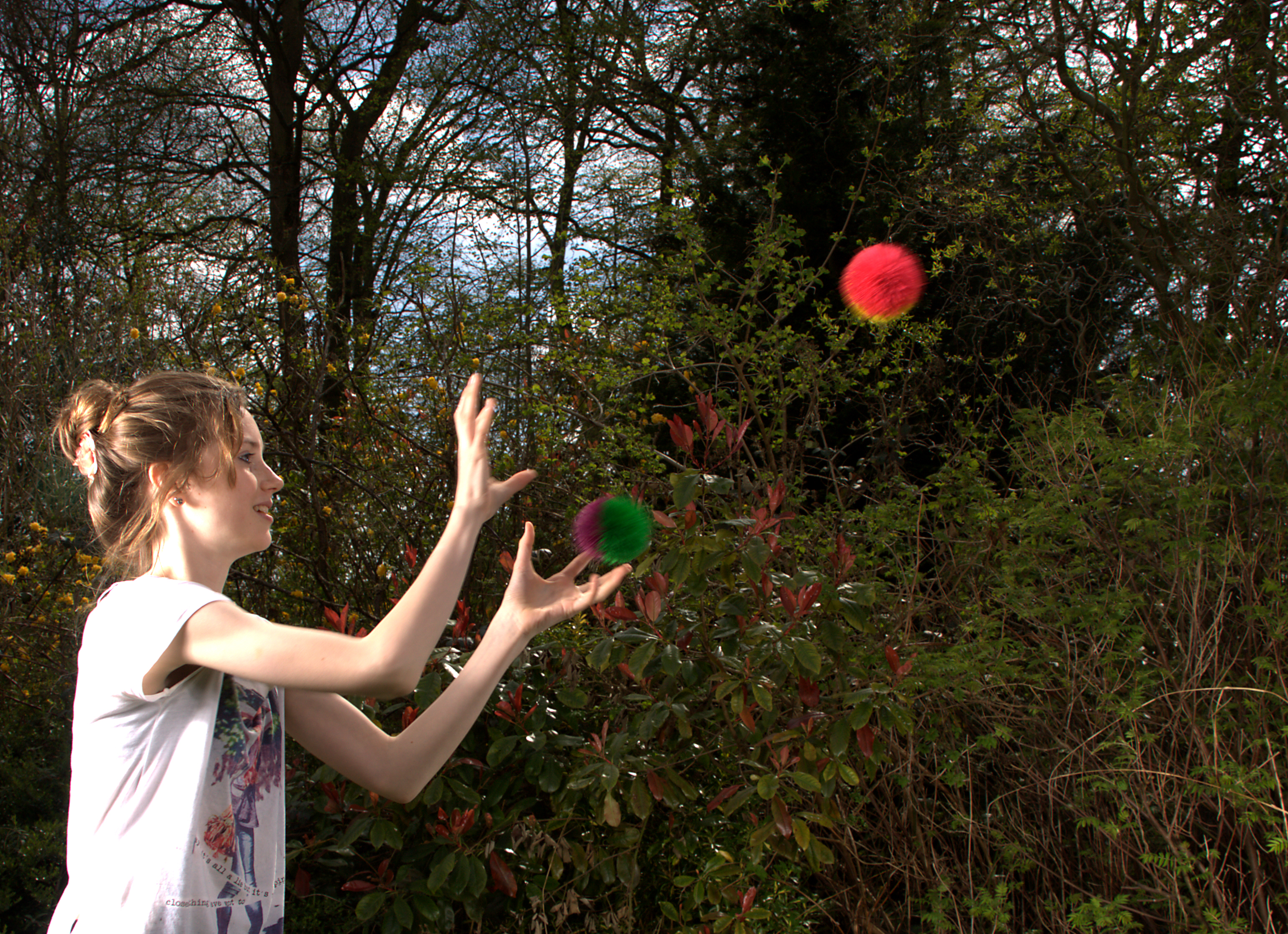
In the photograph above the background lighting was freely supplied by the sun.
To emphasize the body and hand positions illumination was provided by a strobe to the left of shot half way between subject and camera.
A second strobe illuminated the ball with a third low down for the foreground foliage. Exposure time was adjusted for the
required amount of movement blur in the hands and balls; the aperture for depth of field, then the strobe levels were optimised for the shot.
Umbrella reflectors were used on all the strobes.
Luckily ND filters were not required.
(This was one of a series I took for another website production)


(C)2024 P.Jolly. Page last updated 20240713