Paul Jolly Photography Chapter 8
Colour temperature
First I have to explain what this is: if you have an object and you heat it up to say 5400K then the colour of the light radiated
from the object will have a colour temperature of 5400K. The cooler the temperature the redder the light will be (longer wavelength)
the hotter the object the bluer the light will be (shorter wavelength). This is not limited to visible light, inferred and ultraviolet
are also radiated. Temperatures are measured in Kelvin (K) the value is about 273 degrees above the value measured in degrees centigrade.
If you use a mixture of lighting with different colour temperatures then the areas lit with lights of a lower temperature will provide
a redder light that we sometimes call warm lighting. Areas lit with a high colour temperature light (flash for instance) produce a bluer
light sometimes called cold lighting. If only one colour temperature lighting is used then the image can be colour balanced (white
balance) to produce an image that looks 'normal' when viewed.
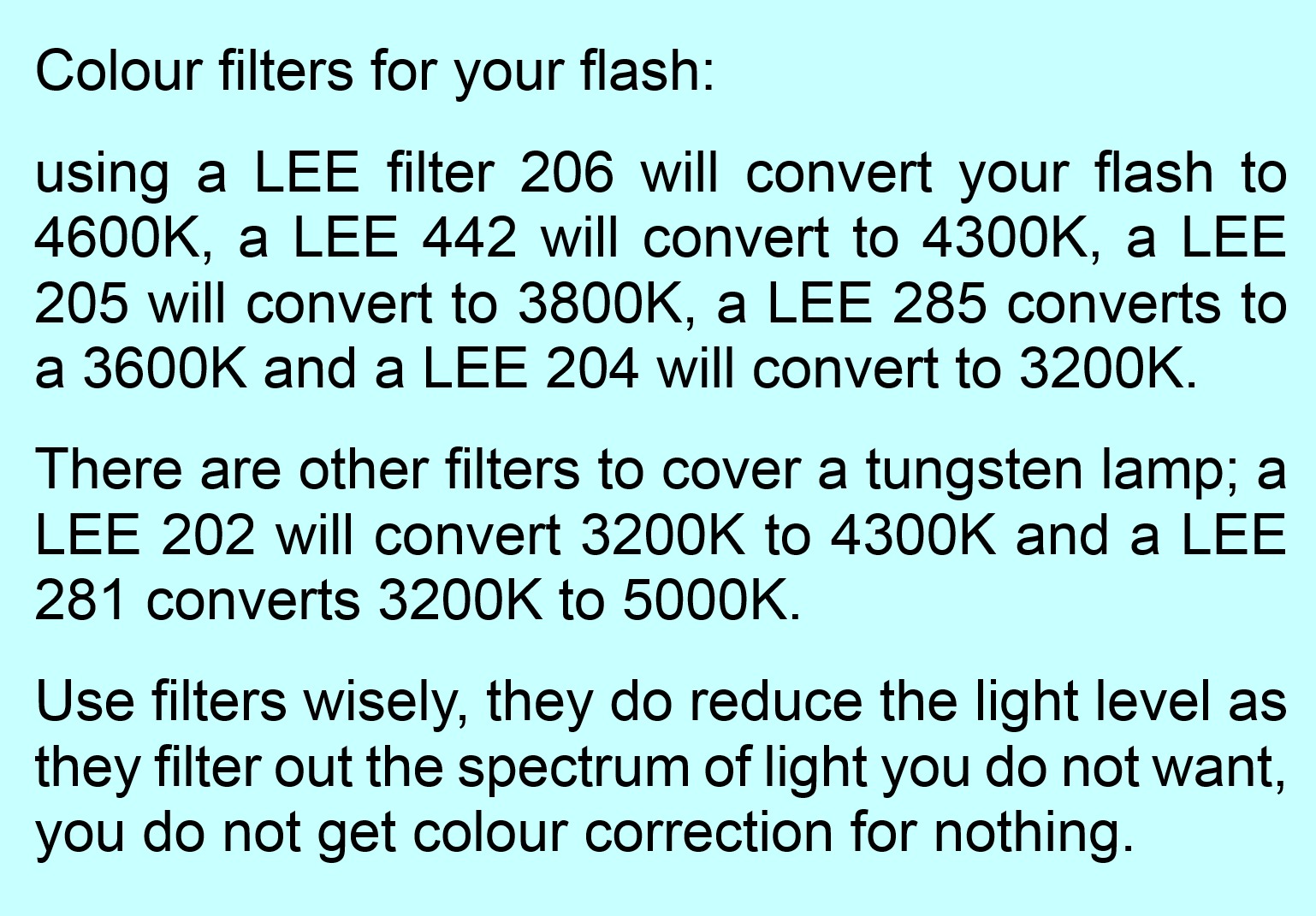
For instance if you need a flash in a room using tungsten light, put a colour filter over the flash to warm the light, if you are
good you can match the temperature; your photograph will have smooth lighting changes instead of a harsh glare.
As our eyes compensate for the lighting we are in, and perform a 'white balance' in our brain, the printed photograph will appear
to be almost the same in any light; but if we use a monitor to view the image then the room lighting will effect the colours we
think we see on the screen; when modifying images on screen we should always ensure we have consistent lighting otherwise our
results will vary: This also applies to dimmer switches, they should either be set at maximum or at a marked position; because
as tungsten light is dimmed its colour temperature drops. Presetting ensures consistency; noticeable if images are stitched together.


(C)2024 P.Jolly. Page last updated 20240713