Paul Jolly Photography Chapter 5
The Triangle
We now have a triangle of items to juggle to try to keep the sensor at its best; ISO, Aperture and Exposure time; in this
combination comes the expression of the photographer.
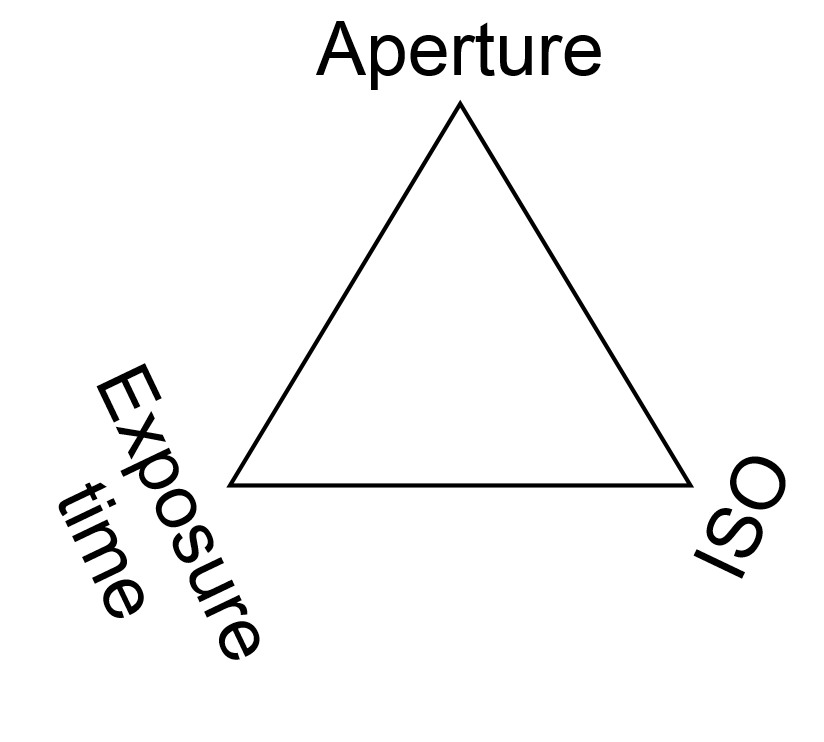
But wait I hear you shout, I have a photograph I want to take; I need a low ISO (easy) a small 'f' number (small depth of field)
and I want to have a long exposure (to blur the motion in the picture) and it is a very sunny day, my photographs always come out
pure white _ what do I have to sacrifice?
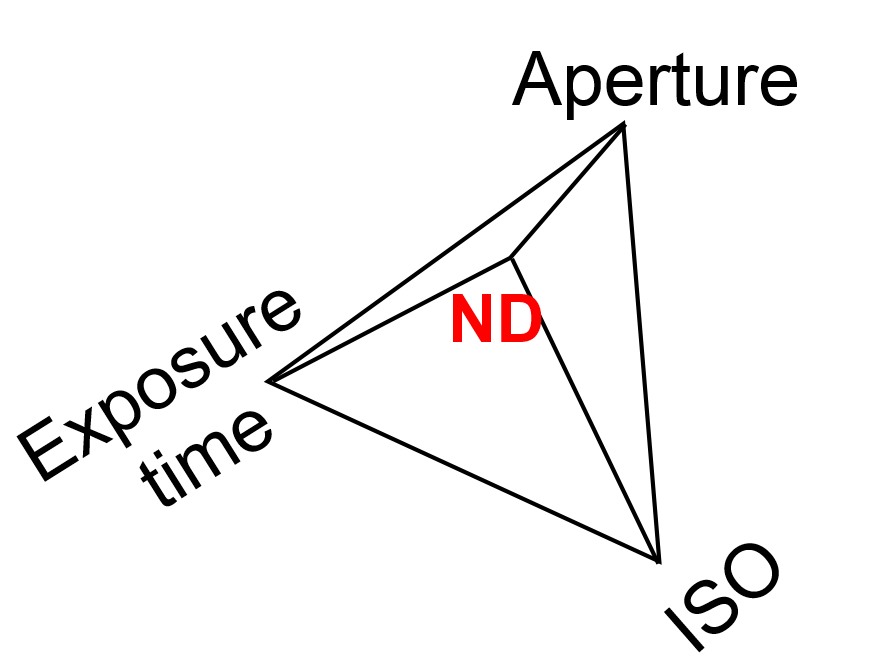
This is where the fourth element comes in, ND (neutral density) filters; these will allow you to extend the range of your shots
when there is a lot of light about; now we are working with a pyramid.
These filters act to reduce the amount of light entering the front of the lens and so acts as though you have increased the 'f'
number but without the effect of increasing the depth of field. These filters reduce all the colours by the same amount keeping
the colour of the scene constant, just darker.
Do we always win? No; when you increase the exposure time you also increase the total noise in the sensor, as it has more time
to generate noise; there is a slight help though as the noise tends to average out over the pixels making the noise less obvious
but it also increases the apparent light level in the black parts of the image and can add a slight misting effect to the image.
What do we do at night? It is difficult to take pictures of darkness but if your shot requires a large 'f' number (large depth of
field) and short exposure time (to stop movement) then you have little option but to increase the ISO setting of the camera and
have noise in the photograph _ you really need more light and that is where the flash gun needs to be used.


(C)2024 P.Jolly. Page last updated 20240713