Tail In or Out
Background
This page describes why a reel to reel tape is stored Tail in or tail out
How it works
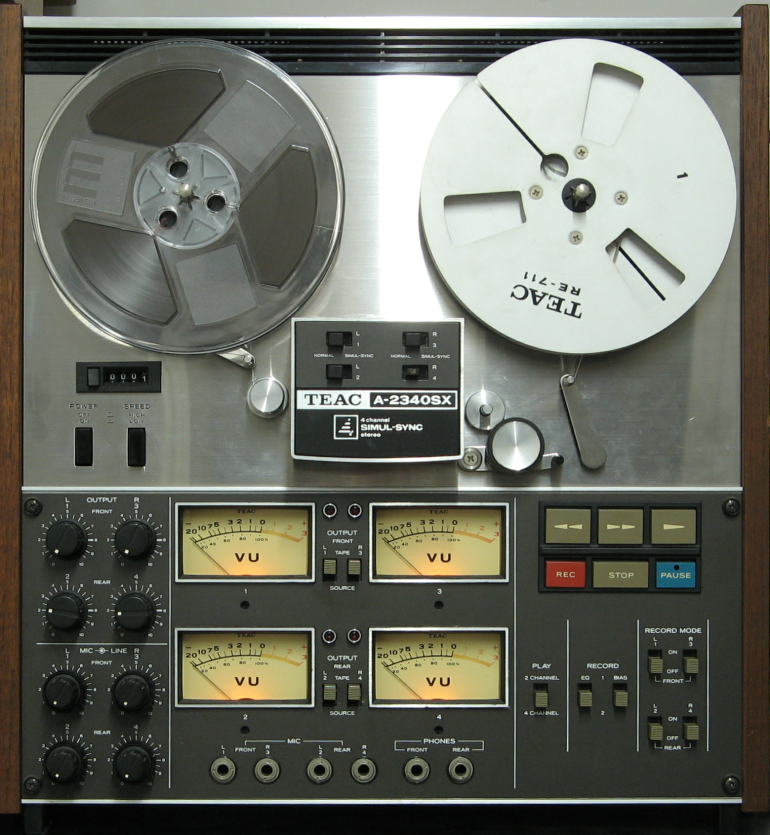
Tail in: This means the reel of tape is ready to play, put the reel of tape on the left hand side and the takeup spool on the right hand side as shown in the photo.
Tail Out: This requires the tape to be rewound first, put the reel of tape on the right hand side and an empty spool on the left hand side. The tape must be rewound from the right hand spool to the left hand spool; once this is done the tape can then be played.
Why do it
Home users tend to use the tail in method:
1. Grabbing a tape to play or record is quick and seems good anough.
2. Few home users think about tape storage problems where the tape can be stretched side to side making the tape wobble.
3. Home machines are typically four track sterio using tracks 1 and 3 one way and tracks 2 and 4 the other which requires the spools to be swapped over for the other side. doing this is makes sence (ish) to use tail in as the first side will be from main to take up spool, when the spools are swapped the tape will then be wound onto the original spool as the second side is played.
Professionals use tail out; there are many reasons for this:
1. When the tape is finished with the take up reel holds the tape and does not need to be rewound.
2. Rewinding a tape before storing has the problem of trapping air in the windings and has variable tension.
3. The tail out method leaved the tape with a constant tension.
4. Print through (magnetic printing between layers on the spool) is an echo when using tail in, whereas with tail out the printthrough sound can be heard before the main sound which sounds odd to the human ear.
5. winding a clients tape from the supplied spool to another can release any problems customer tension winding can put into the tape.
Notes:
A stored tape should always be wound off the spool before being played or recorded on to ensure there are no problems with the tape of the previous storage method. using tail out ensures this is accomplished but home users do not often realise there could even be a problem.
We are also finding 'sticky tape syndrome' and winding the tape out of the storage spool finds this the fastest; however some tapes are fragile and may not cope with the rewind and need to be played directly from the spool as there may be only one chance to obtain a result for re-recording. In this case it is advisable to use a machine that can playback all the tracks simutainiously even though some tracks will play in reverse.
Text and Pictures (C)2026 P.Jolly all rights reserved. Page last updated 20260324