Paul Jolly Photography Chapter 3
ISO setting
I think we all know this one, but just to make it clear: When we use a small aperture (large 'f' number) less light
makes its way through the lens and thus less light can get to the sensor; the larger the aperture (small 'f' number)
the more light can get through to the sensor.
The sensor is however sensitive to the intensity of the light multiplied by the time the light is applied. Thus
for the same quantity of light at the sensor we need a shorter exposure time with a low 'f' number, and a longer
exposure time with a higher 'f' number; this is why lenses with small 'f' numbers are called 'fast' lenses.
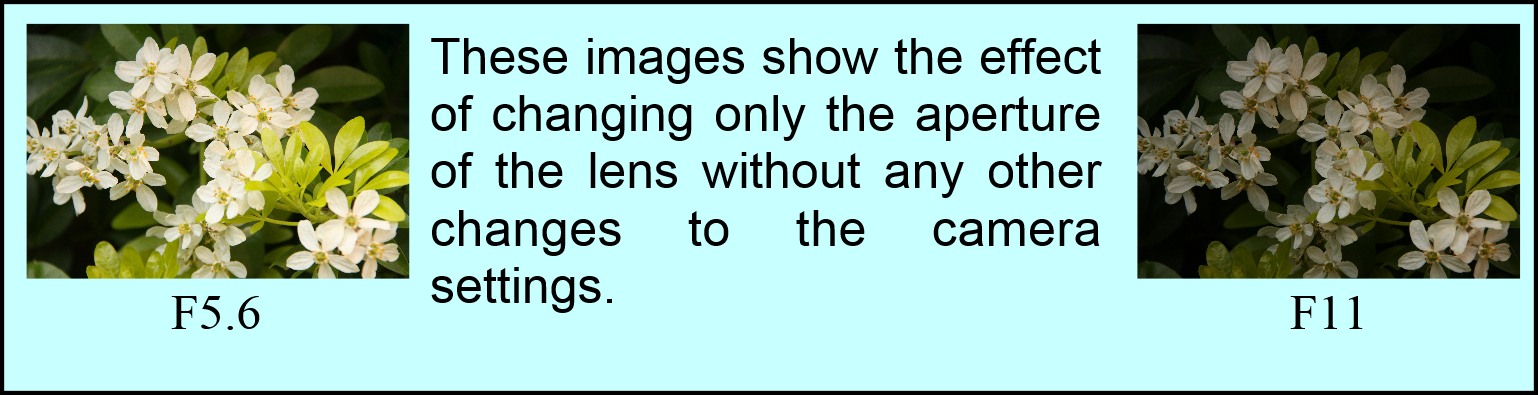 The side effect of the aperture change is that of depth of field. This effect is just based on the size of the aperture.
The larger the aperture the smaller the depth of field (this is just the term for the distance that the picture looks
sharp or in focus) if you use a small aperture then the depth of field will be deeper, so we tend to chose our 'f' number
for the subject we are taking, to either make the subject stand out from the background or foreground, possibly both, or
to give a large depth of field when we are taking scenic shots.
The f number of the lens is purely the effective lens aperture divided by the focal length of the lens.
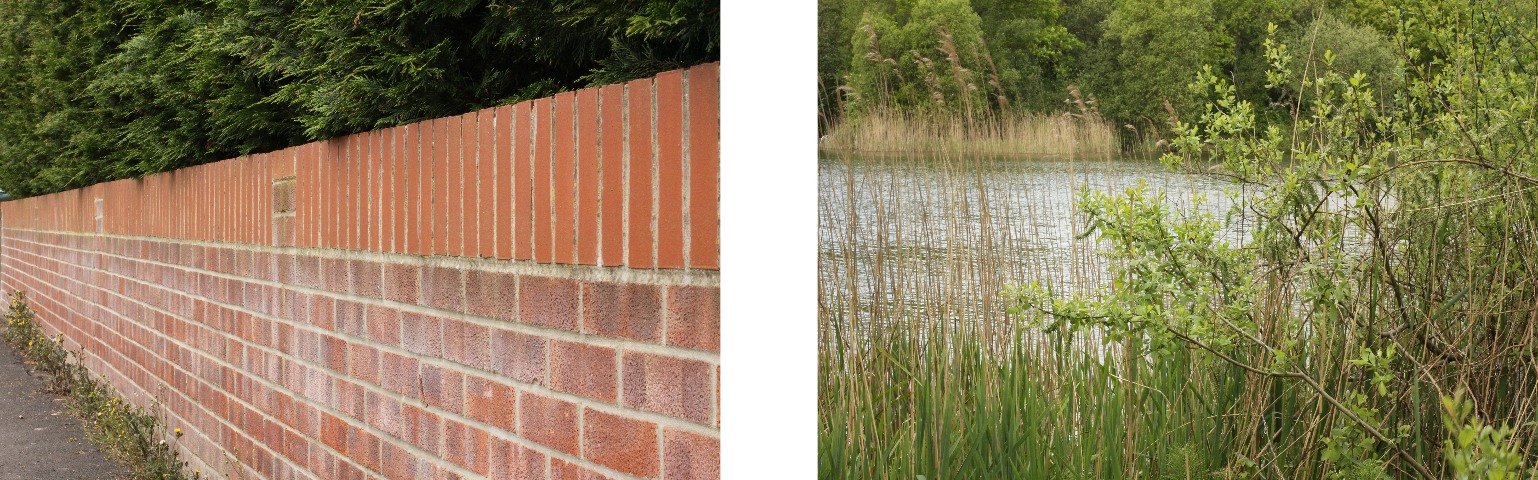
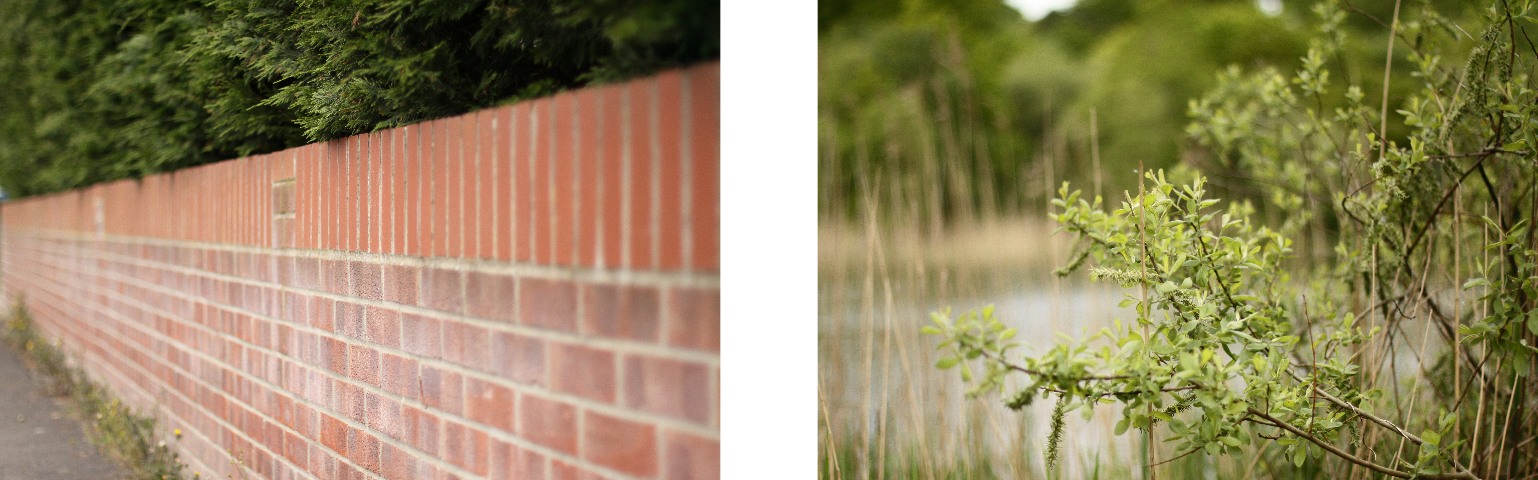 Above the lens is set to f1.4 showing small depth of field. For the bricks this gives a narrow range in focus, for
the lake view it is used to emphasize the foreground. Below the lens is set to f22, this displays a deep depth of
field with most of the wall in focus and providing a view of the lake without accent on any special area. Note:
shutter speed has been changed between f1.4 and f22 to keep the exposure constant (light level multiplied by time).
Above the lens is set to f1.4 showing small depth of field. For the bricks this gives a narrow range in focus, for
the lake view it is used to emphasize the foreground. Below the lens is set to f22, this displays a deep depth of
field with most of the wall in focus and providing a view of the lake without accent on any special area. Note:
shutter speed has been changed between f1.4 and f22 to keep the exposure constant (light level multiplied by time).


(C)2024 P.Jolly. Page last updated 20240713