Paul Jolly Photography Chapter 10
Tilt Lens
Most people are put off this useful lens, mainly because they have heard it is complicated to use and difficult to obtain
good photographs. Understanding how this lens works is important and once grasped it becomes easy to use and predict.
We have to understand some basics here otherwise the explanation will be difficult to follow.
If you can imagine a flat piece of paper, we can call this a plane (no I do not mean fold it up and throw it, but the fact
that it is flat), now let us expand this plane so that the paper is infinitely large but ultra thin.
We now rotate this plane so instead of resting horizontal we make it vertical; several of these planes are used in the photograph.
The sensor in the camera is co-incident with one of these planes; the effective centre of the lens is on another and the
focal plane is a third (this is the term used for where the lens is focused, normally on the subject you wish to photograph).
For the Let us first go back to the standard lens; in this lens the planes are in parallel, which means that they meet at
infinity. When the focus ring of the lens is rotated the lens plane moves slightly but the focus plane moves from close to
the lens (minimum focus distance) to infinity (assuming you are not using extension rings). We now add two further planes,
those of each end of the depth of field (the nearest and furthest distances that are determined to be in focus), the position
of these two last planes change with the aperture of the lens and are relative to the focal plane but still stay parallel.
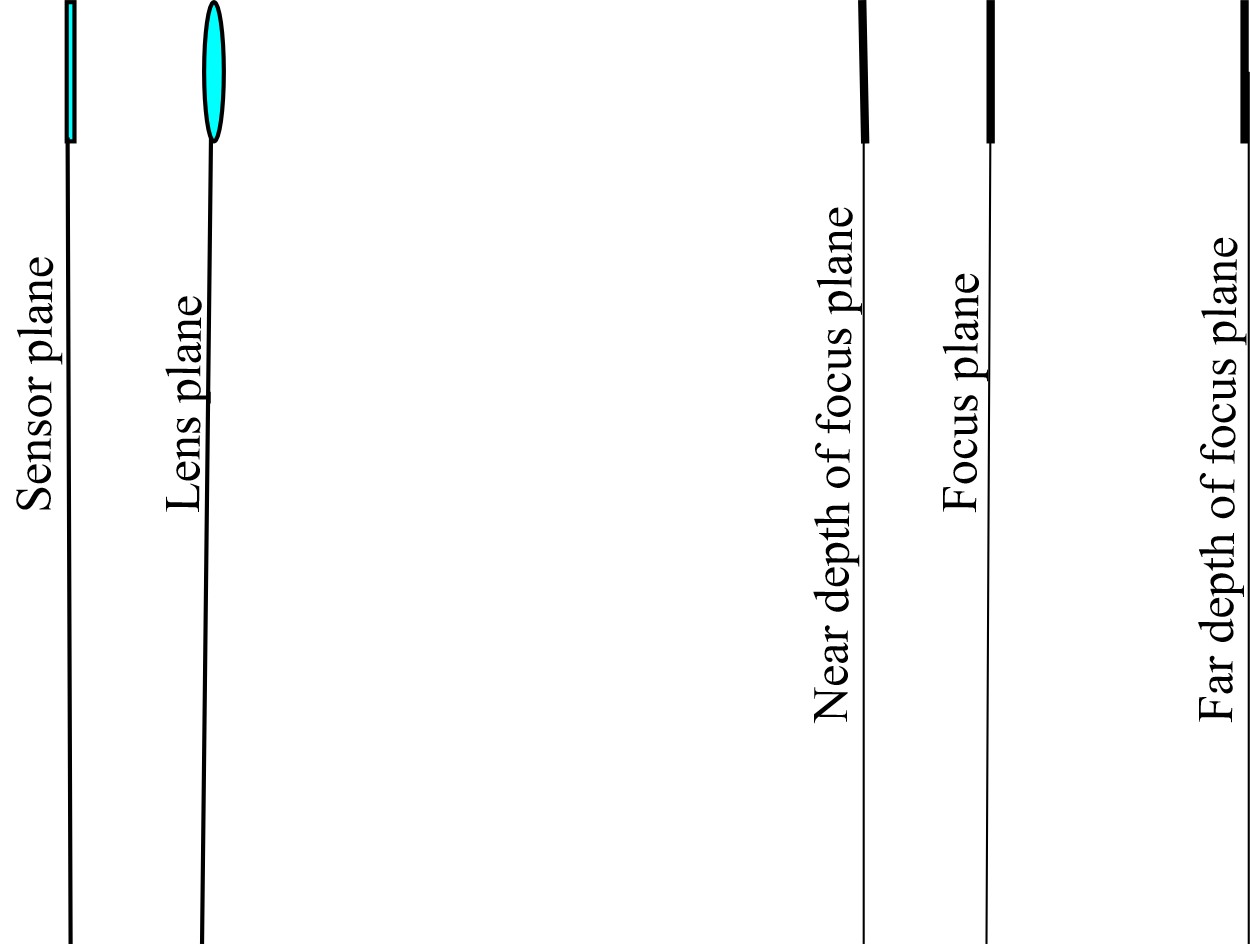
With the tilt lens an interesting change takes place, when these lenses are used as a standard lens the planes are all parallel
(meeting at infinity), but when a tilt is added to the lens the planes meet at a non infinite point. Tilting the lens down causes
the planes to meet below the camera, thus the focal plane is at an angle to the camera. Changing the focus of the lens still
moves the focal plane and the positions of the depth of field planes, but now these planes meet: Thus the focus control changes
the angle of the planes rather than distance.
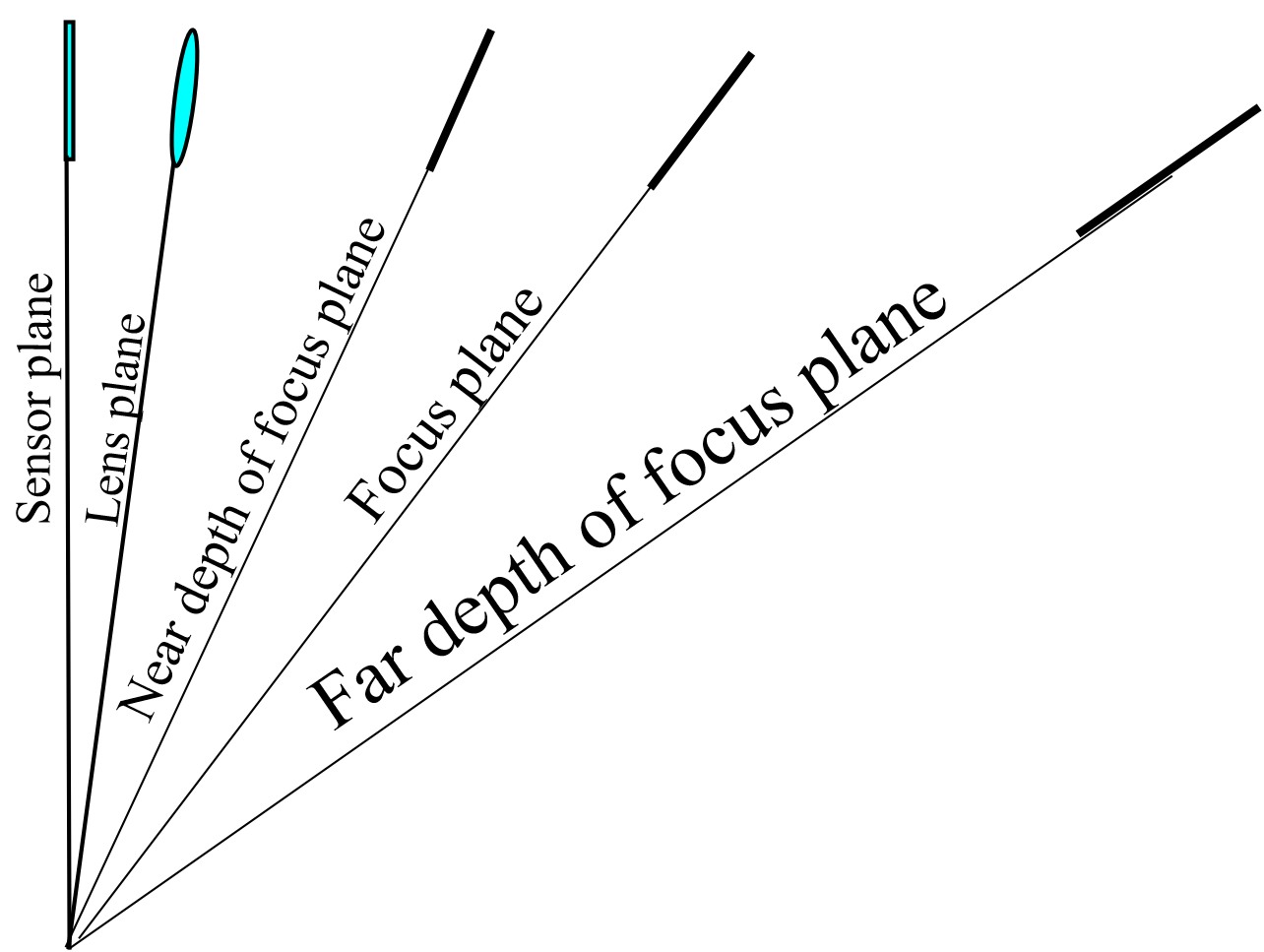
The position of the line of intersection of the planes is controlled by the tilt angle set on the lens and the distance between
the sensor plane and the effective lens plane.
Changing the aperture will change the angles between near and far depth of focus relative to the focus plane.
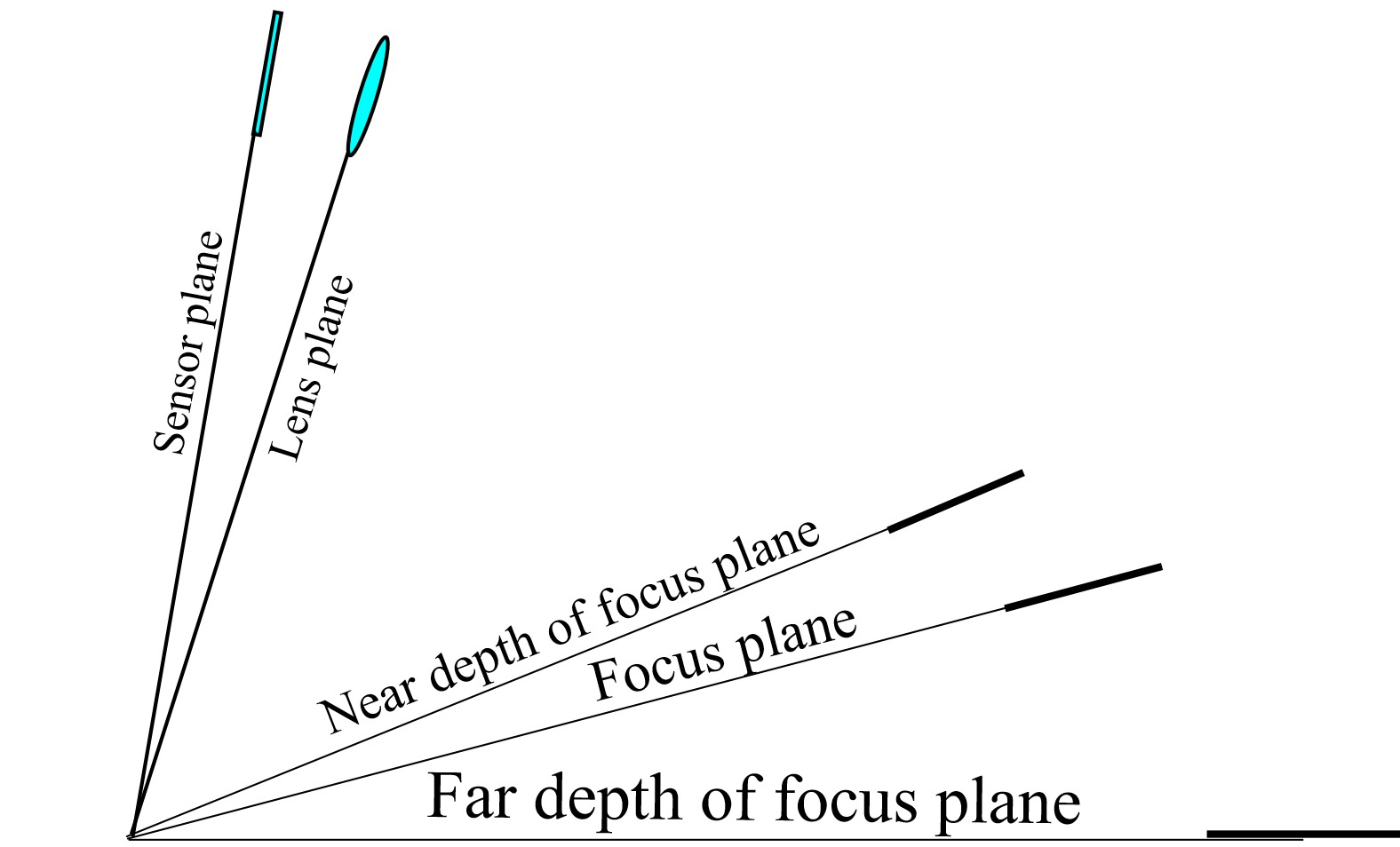
As an instance of this lens, it can be used to photograph a hill or mountain and by tilting the focal plane to match that of
the face of the object, the whole of the hill or mountain face will remain in focus.
Taking this to the extreme we can focus along the ground:
A Shift Tilt lens, as the name implies, combines the functions of a shift and tilt in the same lens.


(C)2024 P.Jolly. Page last updated 20240713