Paul Jolly Photography Chapter 1
Dynamic range and Noise
These days with most of the cameras being digital we have to think of the sensor rather then the film of old.
For the best picture we would like to have the largest dynamic range possible; in other words the maximum
difference in levels between the blackest areas of the picture and the whitest areas thus using to the full
the expensive sensor trapped inside the back of your camera (middle picture).
The photo lower left uses the full sensor dynamic range (blue) but the image contains a larger range (red).
The photo lower right only uses part of the dynamic range of the sensor.
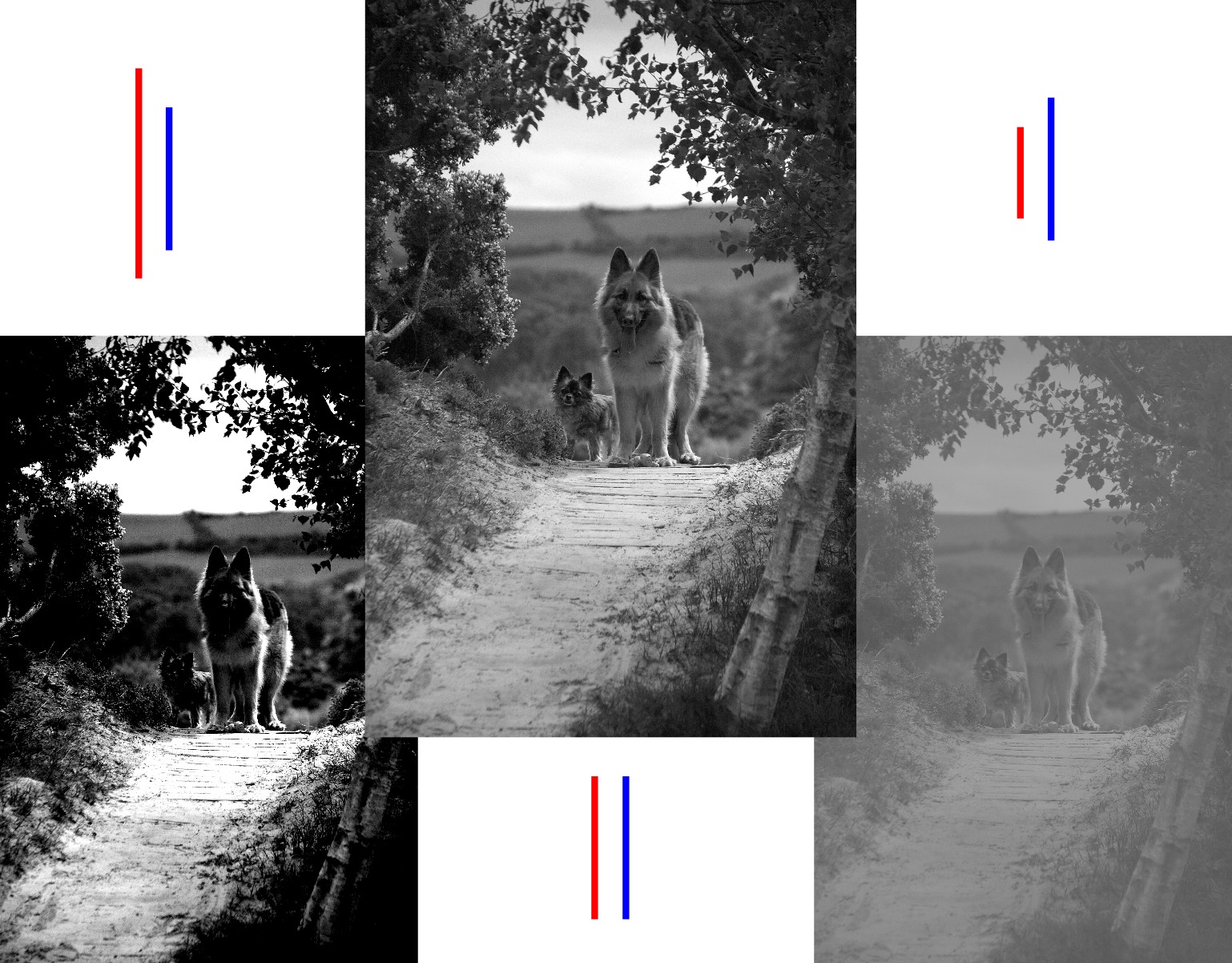 For maximum range the blackest part of the picture will have no light falling on the sensor and the whitest
part of the image will have just enough light falling on an individual pixel that it cannot respond to any extra light.
For maximum range the blackest part of the picture will have no light falling on the sensor and the whitest
part of the image will have just enough light falling on an individual pixel that it cannot respond to any extra light.
Now your first question would be why bother? Well, this is to limit the amount of noise in the picture; OK,
now you want to know what noise is..
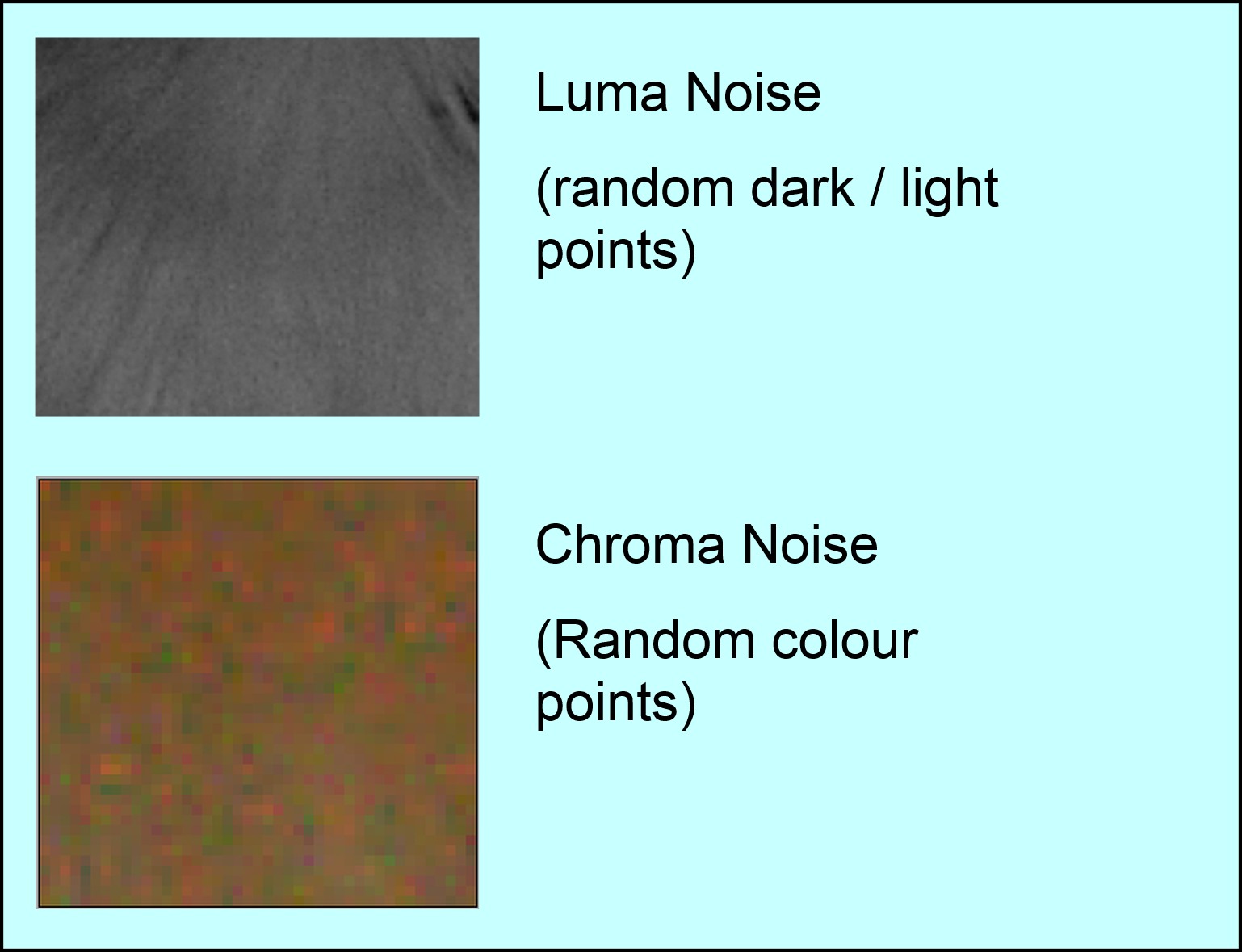
One type of noise you see in a picture is different light levels from pixel to pixel when you know you have taken an
image of a plain grey area; this is called luminance noise.
The other form of noise is chromanace noise; this is the difference in the colour between pixels in the image.
In fact luminance noise and chromance noise are linked to the same cause: extra electrons being generated in the
sensor due to either extra light or thermal effects within the sensor (for the best pictures the sensor needs to
be kept cold as this lowers the thermal noise, in practice it would need to be so cold, either the rest of the
camera electronics would stop working, the battery would freeze or your hand would be stuck to the camera).
The electronics that convert the sensors detected light levels into a digital signal can also introduce noise into the picture.
As the colour sensor is constructed with pixels responding to red, green and blue light (normally twice as many
green sensors than red or blue) and the colour of a single pixel being determined from those surrounding it,
and their neighbours, there is a blurring of the noise effects of each pixel but the result can still be seen
on images with low light levels at the sensor.
Now we know what we have to do, how can we use the camera controls to give us the best result?


(C)2024 P.Jolly. Page last updated 20240713